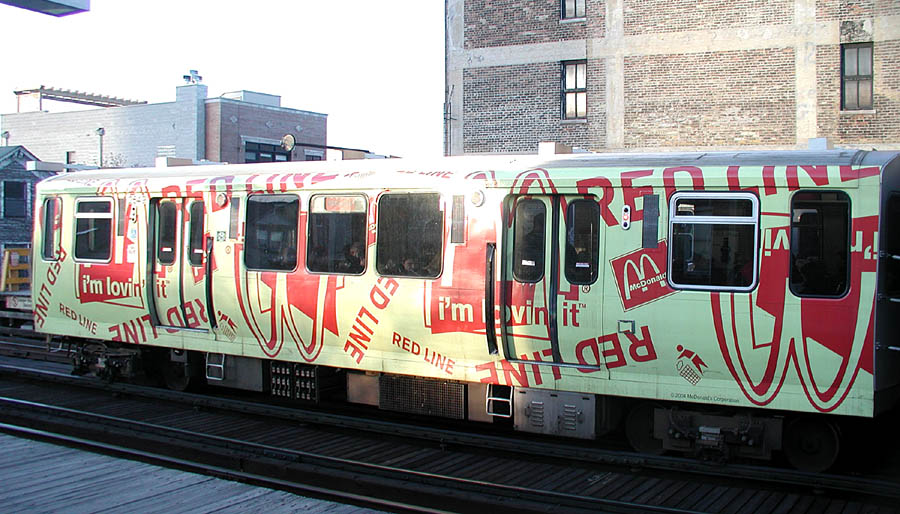
In light of my research on the link between mass transit identification design and neighborhood identity, I was immediately struck by the news coming out of Toronto last week that the TTC is contemplating selling station and subway line naming rights to the highest corporate bidder. This isn't the first time such proposals have been floated by cash-strapped transportation agencies, but if the possibility is to be taken seriously, we should consider its less tangible potential consequences for the communities it may effect.
My research has shown that the identification of transit lines and stations can be a highly sensitive issue in cities, and that these seemingly innocent naming and design decisions can potentially have an important impact on local identity (click for pdf). For instance, not only have drawn out debates demonstrated passionate differences in opinion about how a light rail line's name and color ought to reflect the character of the communities it serves (as has been the case in Los Angeles), but evidence suggests that choosing neighborhood- or landmark-based names for rail stations can to promote (as in Chicago) or even outright define (as in London) community identity, both locally and throughout the system.
So beyond the awesome mock-ups of some new Toronto station signage and a gorgeous system map that the folks at Torontoist created, there may be wider implications of corporate sponsorship on this scale, especially when it concerns things as tied to local culture and identity as transit stations. Would we sell naming rights to our city parks, branch libraries, post offices, or schools?

Of course, we cannot pretend such sponsorship doesn't provide serious financial benefits to cash-strapped localities. There are no doubt plenty of riders who would gladly change the name of their local station (maybe even the name of their neighborhood!) in exchange for better transit service. Subway systems are already rife with advertising, and transit agencies should, I think, take advantage of the eyeballs to help subsidize the system. (To that end, kudos to the TTC at least for considering ending their contract with CBS Outdoor and maybe taking a proactive stance on collecting these advertising dollars directly.) Though even here, Jordan Seiler of the Public Ad Campaign has some thoughts on the extremes at which excessive efforts to convert trains and stations into billboards can be too much.
It's a delicate tradeoff, but at the very least the debate about full-scale corporate branding of transit stations and lines should be informed by an awareness of its potential implications for neighborhood identity, and in turn the real importance of this identity for urban communities.